

Apology flowers: what works, what backfires, and when to send nothing at all
Apology flowers: what helps, what backfires and when to skip it. Hand-wrapped roses from our Port Jefferson shop, delivered the same day.
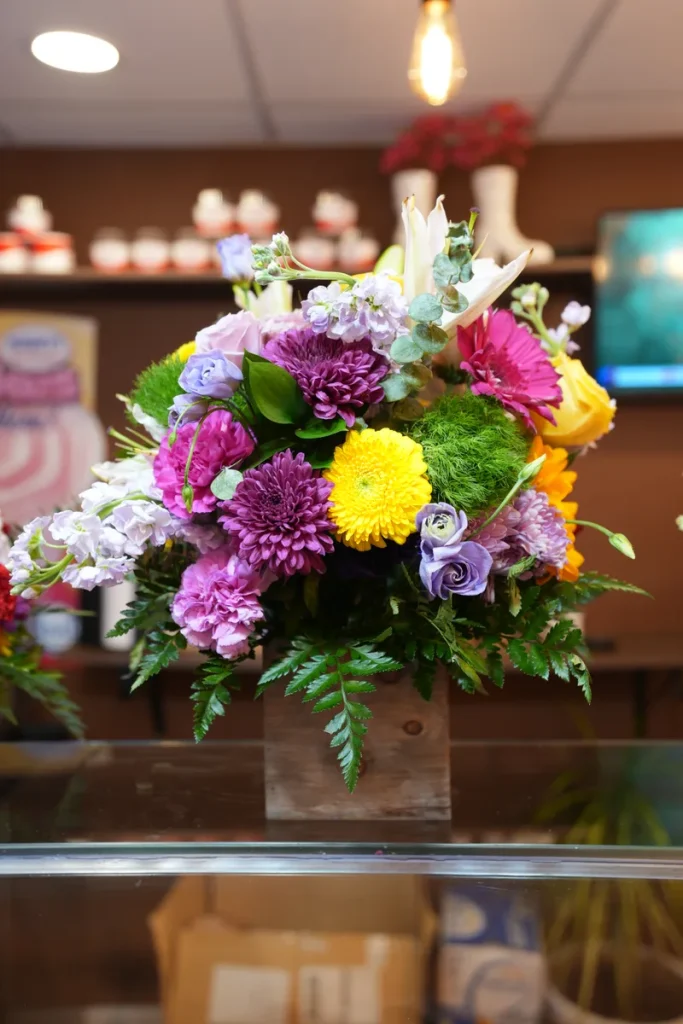
Tell us what happened
You do not have to give us the details, but the shape of it changes what we would build and what we would tell you to write.
Not the cheapest one
This is the one occasion where the entry-level bunch can work against you, and we would rather explain why than sell you one.
Sometimes the answer is no
If what you describe sounds like a situation flowers would make worse, we will say so, and there is no order to place.
The card comes first
Work out the wording before you pick the flowers; every order we take here goes better in that order.
Every other occasion we handle has a floor under it. A birthday arrangement that misses is still a birthday arrangement. A get-well delivery in colours nobody would have chosen is still someone thinking of you, and the worst case is a shrug. This occasion has no floor. An apology delivery can land as an insult, as pressure, or as proof that you would rather spend money than say the thing out loud, and when it lands that way you are further from being forgiven than you were before the van pulled up. It is the only occasion on this site where the gift can leave you worse off than sending nothing at all.
That asymmetry is worth holding on to, because it changes what you are actually deciding, and because it is the opposite of how these orders usually get placed: in a hurry, upset, at eleven at night, on the assumption that anything sent is better than nothing sent. Four things decide how this lands and only one of them is on the product page. What the card says. What the arrangement is genuinely made of. Where and when it arrives. And whether it should be sent at all. This page takes them in that order. If you reach the fourth and the answer is that it should not be sent, that is a result rather than a failure — we would rather lose the order than sell you a second offence.
The card carries the apology. The flowers carry the card.
There is real research underneath this, and it is worth one paragraph here before you go and use it properly. In 2016, Roy Lewicki, Beth Polin and Robert Lount published “An Exploration of the Structure of Effective Apologies” in Negotiation and Conflict Management Research, testing the six components an apology can be built from. Acknowledgement of responsibility did the most work. An offer of repair came next. Asking to be forgiven — the line the trade’s suggestion sheets lean on hardest — finished bottom of the six, and the authors were blunt about it: if something has to go, lose that one. Our page on what to write on an apology card takes the components one at a time, with lines short enough to fit inside a florist’s card, and this page will not repeat the exercise.
Three things to carry with you in the meantime. Name what you did rather than how the other person reacted: “I was wrong to say that in front of your family” does work that “I’m sorry you were upset” cannot, because the second sentence quietly relocates the problem into their reaction. Keep the word “if” out of it entirely — “if I hurt you” reads as a hedge even when it is not meant as one. And do not use the card to explain yourself. An explanation and an excuse are the same paragraph to a person who is still angry, and there is no room on a card to make the distinction land.
Why the cheapest arrangement is the wrong product here
The costly-signalling literature says roughly what you would expect: an apology that costs the person something reads as more sincere than one that costs nothing. What is less expected is where that stops. A 2023 paper in Letters on Evolutionary Behavioral Science found that an apology accompanied by a tiny monetary compensation was no more effective than a verbal apology on its own — and that trivial compensation can read as less sincere than offering nothing at all.
That is a floor, not a ladder. It does not mean spend more and be forgiven proportionally; it means there is a level below which the gesture stops being a signal and starts being an insult, because a token says you priced the problem and priced it low. We would rather state the commercial consequence plainly than let you find it out on delivery: the entry-level bunch is the wrong product for this occasion, and recommending it would make us a small amount of money at your expense. Ask what any arrangement is actually built from. If the answer is a few standard stems padded out with greens, that is the entry-level product wearing a different name. Carnations are a genuinely good flower and hold up longer than most, but a thin handful of them is also what the cheap bouquet is made of, and people can tell the difference between a flower chosen and a flower used as filler.
Two colour traps that matter more on Long Island than most places
Colour is not the subject of this page and it is not where these orders usually go wrong. But there are two specific traps that turn an apology into a second offence, and both of them are more likely here than the national advice would suggest.
Chrysanthemums
In Italy, Poland, France, Spain and Croatia, chrysanthemums are funeral flowers and effectively nothing else — they are what you carry to a grave. Suffolk County is 20.9% Italian ancestry, which makes this less of a curiosity here than it is elsewhere in the country. Mums are also cheap, sturdy and shippable, so they turn up as bulk in mixed arrangements constantly, often without being named on the product page. If the recipient’s family came from any of those countries, say so when you order, and say it as an instruction rather than a preference: the substitution standard the trade works to allows a shop to swap in stems of similar value and colour when something runs short, and “no chrysanthemums, at all, in anything” is the only version of that request that survives a busy afternoon.
Yellow roses
Yellow roses read as friendship to most people now, and for most recipients they are entirely safe. But Kate Greenaway’s 1884 flower dictionary — the source that most modern flower-meaning lists are ultimately copied from — glossed the yellow rose as “Decrease of love. Jealousy.” A minority of recipients still hold that reading, usually people who were taught flower meanings by a grandmother, and a minority is enough when the message you are trying to send is that you took this seriously. If the apology involves anything adjacent to jealousy or another person, the yellow rose is a coincidence you do not need.
Where it lands is part of what it says
A delivery to a workplace has an audience. Colleagues will see the flowers arrive, they will see the reaction, and some of them will ask. If the thing you are apologising for is private, sending it to a desk converts a private apology into a public performance, and it puts the recipient in the position of having to manage other people’s curiosity on a day you already made harder. Sending to a home is the quieter option and, for this occasion specifically, usually the right one.
Timing does similar work. Flowers arriving before you have said anything read as an attempt to soften the ground — the apology has been outsourced to a delivery driver, and the conversation you owe is still owed. Flowers arriving after a real conversation read as continuation, which is what you want. The order to aim for is: say it, then send them, so the delivery confirms something rather than announcing it.
The situations where flowers make it worse
Three patterns come up often enough to name. The first is repetition: if this is the second or third time the same apology has been made for the same behaviour, flowers stop reading as remorse and start reading as procedure, and the arrangement itself becomes evidence that nothing is going to change. The second is the case where repair is possible and obvious — the thing that placed second in the research above — and the flowers are being sent instead of it. Nothing in a vase substitutes for paying back the money, calling the person you should have called, or undoing the thing that can still be undone. The third is when the recipient has asked for distance. A delivery is a contact that cannot be declined; it arrives whether or not the person wanted to hear from you, and it obliges them to respond. We go through these cases in more detail, including the ones where we would tell you to hold off, on when not to send apology flowers.
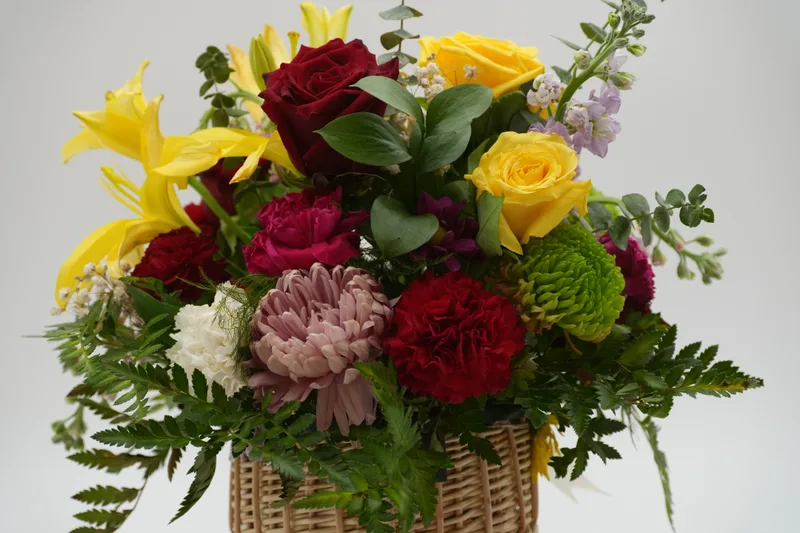
What is still in the room a week later
Order this and something of yours stays in another person’s house for about a week, which is longer than you will be thinking about it. That is the part almost nobody plans for. The delivery is a single moment to you — you place it, you wait, you hear back or you do not — but at the other end it is an object on a counter that has to be found a vase, topped up, moved out of the way of the toaster, and eventually carried out to the bin. Every one of those small chores is a few more seconds of thinking about you, on a schedule you set and they did not, and whether that reads as patience or as pressure depends entirely on what you did and how they feel about you on the day. Flowers from someone you are glad to hear from are a pleasure. Flowers from someone you have not decided about yet are two weeks of a stranger’s opinion sitting in your kitchen. So the honest question before you order is not whether the arrangement is nice enough. It is whether another week of being reminded of you is something this person would choose. When the answer is yes, the arrangement earns its place: it holds the space between the moment you understood what you had done and the moment they are ready to hear you say it, it puts something of yours in a room you are not standing in, and it shows you spent — money, yes, but also time, attention, and the small discomfort of describing your own bad behaviour to a stranger on the phone — on someone who at that moment had no particular reason to expect it. That is real, and it is not nothing. It is also, and this is the part worth accepting before you order, the part nobody will ever mention afterwards. If things come right, they will come right because of what you said and what you did next, and no one involved will ever say the flowers were the reason.
Roses at the door tonight
Call 8 hours ahead. Made in our shop and ready with 8 hours’ notice.