

With peonies the month decides the price — here is the window
Peonies on Long Island: the late May to June window when they are the best value, and how the season sets the price.
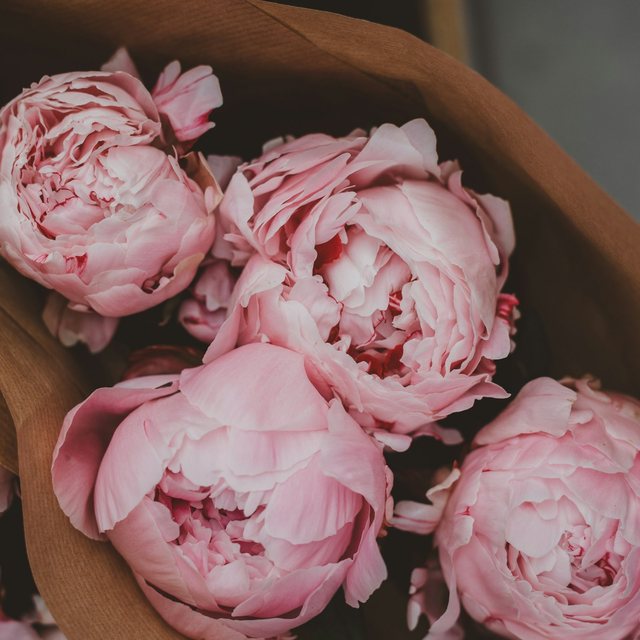
Six weeks, late spring
Roughly late May into June is the local window on Long Island, and it is when peonies are the best value they will be all year.
Outside it, you pay freight
The same bouquet in another month has been flown here, and that journey sits in the stem price rather than in ours.
Waiting is a real option
If your date can move a few weeks into the season, tell us and we will say plainly what that changes.
We will tell you no
If the buds our florists can get are too tight to open by your date, you hear that before you order, not after.
Most stems drift in price across the year — a little more into a holiday, a little less in a glut. Peonies do not drift. They step, and the step is the local season opening and closing. For roughly six weeks in late spring, peonies here are a field flower cut nearby. Every other week of the year, the identical bouquet has been grown in another hemisphere or held in cold storage and shipped in, and the cost of getting it here is in the stem price. So when someone asks what peonies cost, the honest first answer is a question back: what month is it. Nothing else in our flower guides behaves this way, which makes peonies the one stem we will actively suggest you wait for.
The six weeks when the calendar is on your side
The local field season runs roughly late May into June, and a cold or wet spring shifts it earlier or later — it is a window, not a date on a chart. Inside it, two things improve at once. The price is the lowest it gets, because nobody has paid to fly the stems anywhere. And there are simply more of them about, so our florists can choose buds at the stage your date needs rather than taking whatever the box holds. If you have any freedom at all in when the flowers land, this is the stretch of the year to aim at. A separate guide goes deeper on how the season runs year to year.
What the rest of the year is actually buying
Peonies are available most of the year, and we do not pretend otherwise. What changes out of season is where they come from and what that costs. Imported stems travel further and are usually cut tighter to survive the trip, which means less margin for error if you need them open on a fixed day. Availability is thinner too, and thin availability is where quiet substitution happens elsewhere — we would rather tell you what our florists can genuinely get. That is the whole explanation for a February quote looking nothing like a June one, and there is no clever way around it. It is freight, not markup.
Wait, pay, or send the shape instead
Out-of-season peony requests really only have three honest answers, and it is worth knowing which one you are choosing before a price appears.
Move the date into the window
The strongest option when the occasion allows it. A delivery pushed into late spring costs less and arrives at a moment nobody else is sending flowers, which tends to land harder than the same bouquet on a crowded weekend.
Pay the freight knowingly
Entirely reasonable if the flower itself is the point — an anniversary tied to peonies, a person who only ever wanted peonies. We will quote it plainly rather than talk you out of it. Just order with more lead time than you would in June, because tight imported buds need the extra days.
Send the shape, not the name
If what you actually want is that soft, full, overflowing head, garden roses and hydrangeas carry it for less money out of season. This is the substitution we suggest most, and only ever before you order.
Mother’s Day falls on the wrong side of the window
This is the awkward one. Mother’s Day lands in the first half of May, ahead of the local peony season almost every year, so peonies requested for that weekend are imported stock at import prices and often cut very tight. They can be done, and we do them. But if the point is the flower rather than the name of the flower, our Mother’s Day arrangements hold better value that weekend — and a peony delivery a few weeks later, in season, arrives exactly when nobody else is sending anything.
June weddings all chase the same six weeks
June weddings on Long Island ask for peonies by name constantly, and the requests cluster into the few weeks the flower actually exists here. Two things follow. Book early, because the supply for those weekends is spoken for well in advance. And build the timeline around opening rather than around delivery: peonies for a Saturday need to arrive earlier in the week, in bud, and be brought on deliberately. Our weddings and events team plans peonies backwards from the ceremony for exactly this reason. If the date sits outside the window and the look matters more than the label, see the substitution above.
What lands in the box, and when it opens
Whatever month you order in, peonies arrive as hard, closed, green-shouldered buds. They are cut and sold that way on purpose, because a peony cut open is a peony that drops its petals on the drive over. What you receive is the flower before the good part, and the good part takes several days: the buds soften, split at the shoulder, then unfurl. Say so on the card, because otherwise a very good delivery reads as a mediocre one for a day or two. Cut the stems on an angle, put them in fresh water, and leave them where the recipient can watch. A peony holds its open form for a good while once it gets there, and judged across its whole life rather than its first morning it is one of the most rewarding flowers we send.
There is one check worth doing on arrival. Squeeze a bud gently between finger and thumb. If it gives slightly, like a marshmallow, it is ready to open and will. If it is completely solid with no give at all, it was cut too green and may never open properly. That is the one genuine fault to look for, and it is the one we want to hear about.
Warmth speeds them up, cold holds them back
Peonies answer to temperature more obediently than almost anything else in the cooler, which is why an order can be scheduled around a date at all — and why part of the timing is in your hands once the box arrives.
To open them sooner
Warm room, warm water in the vase, and good light. Strip any leaves that would sit below the waterline. If a bud is stubborn, a gentle roll of the shoulder between your palms can help the sepals release.
To slow them down
Cold room, cold water, out of the sun. Peonies that have arrived ahead of an event can be held dry in a refrigerator, wrapped and out of water, then cut and rehydrated when you want them to move. This is how event florists stage them.
About the ants
Peony buds produce nectar on the outside of their sepals, and ants come for it. They do no damage, they do not get inside the flower, and they are a sign of a bud that has been handled gently rather than scrubbed. The old story that peonies cannot open without ants is not true — the ants are freeloaders, not midwives. If a stem arrives with a passenger, shake the bud head-down outside before bringing it indoors. Do not spray anything on a peony bud.
What a peony has meant, and what nobody can source
The plant behind the cut stem is not native to anywhere near here. Cornell Cooperative Extension in Nassau County names Paeonia lactiflora, the Chinese peony, as the parent of most modern cut-flower hybrids, and gives its native range as Siberia, Mongolia and northern China. Its recorded history runs a long way back. The herbaceous peony has been cultivated in China for 2,500 years and the tree peony for 1,500. Peony appears in the Guofeng Zhenwei section of the Shi Jing, the Classic of Poetry, roughly 2,400 years ago. The tree peony had differentiated from the herbaceous peony by the Han dynasty, and by the Tang, in the seventh century, the two were clearly distinguished.
King, queen, or prime minister
Two of the sources we hold rank those two peonies differently, and it is worth saying so rather than quietly picking one. A University of Alaska Fairbanks review of Chinese peony history gives the tree peony as the “king of flowers” and the herbaceous peony as the “queen of flowers”. A peer-reviewed etymology paper gives the pairing instead as “Mudan is the king of flowers and peony is the prime minister”. Tree peony as king in both; the herbaceous peony’s title unsettled between them. The cities divide along the same line. Luoyang was already famous for its tree peonies in the Tang dynasty and remains the tree peony capital of China, and its peony festival is generally held in April and lasts three weeks to a month, because the flower season there runs only from April to early May, which is that city’s version of the calendar problem we have here. The herbaceous peony’s centre is Yangzhou, where its culture thrived under the Song dynasty, streets were named after it, and it is still one of that city’s two flowers.
The meanings we will not print
Ask what a peony means and the internet answers with total confidence: bashfulness or shame from the Victorian language of flowers, the flower of the twelfth wedding anniversary, a colour code in which pink is romance and white is apology and coral is a new beginning, the national flower of China. We went looking for where any of that comes from and could not trace a single one of them past florist copy. Some of it may well be old and true. We have no source for it, so we will not hand it to you as fact to write on a card. What is actually on the record is narrower and duller: the peony is the state flower of Indiana, adopted by the 1957 General Assembly at Indiana Code 1-2-7, replacing the zinnia that had held the title since 1931. The legislature designated no variety and no colour.
Roses at the door tonight
Call 8 hours ahead. Made in our shop and ready with 8 hours’ notice.
Common questions
Why is a February quote so different from a June one?
Because in June the stems were cut nearby and in February they were flown in from another hemisphere or pulled out of cold storage. Same flower, completely different journey, and the journey is priced into the stem. It is the single biggest thing to understand about buying peonies.
Can I order peonies in December?
Usually, yes, at import prices, and we will quote it plainly rather than talk you out of it. Expect tighter buds and give them more lead time than you would in season. If availability is thin on the day, we tell you what our florists can actually get instead of substituting something quietly.
Is it worth waiting for the local season?
If the date can move, almost always. You pay less, the stems are fresher off a shorter trip, and there is more choice of bud stage. If the date cannot move — a birthday, an anniversary, a wedding — then it cannot move, and we work with what the month allows.
My peonies arrived closed. Were they delivered wrong?
No. Every peony that travels is cut in bud, in season or out, and it is the only way the flower survives the trip with its petals attached. Give it warmth, light and fresh water and it will open over the following days. The only real fault is a bud with no give in it at all.
How do I make sure they are open for a specific day?
Tell us the date they need to be open, not the date you want the box to land, and let us schedule ahead of it. We would rather send buds early and have you warm them into bloom than land on the day with flowers that need more time than the calendar allows. We do not promise a bloom to the hour — temperature does part of the work, and it is in the recipient’s room, not ours.
Are the ants going to end up in the house?
Turn the bud upside down and shake it outside before the stems come in, and that is the end of it. They are on the outside of the bud feeding on nectar, not living inside the flower, and they cause no harm to the bloom.