

Bar and bat mitzvah flowers on Long Island: the bimah arrangement is due Friday, and the party flowers are not allowed to come early
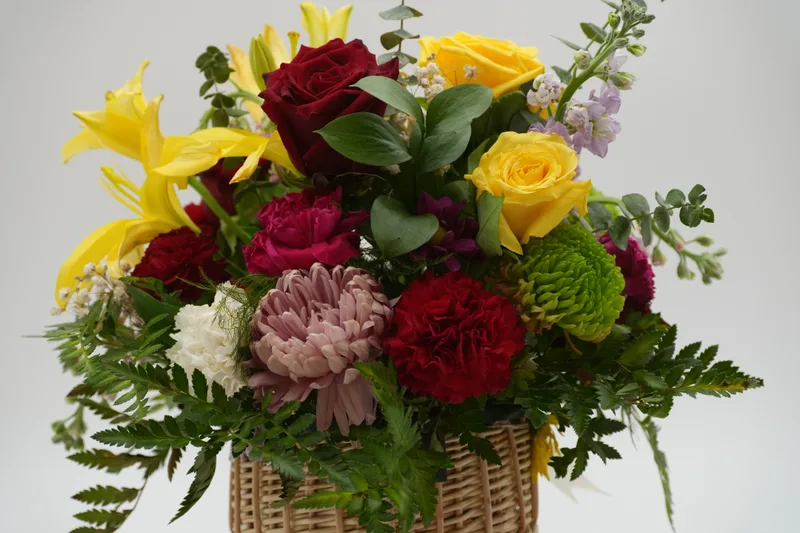
One simcha, two deliveries
The synagogue arrangement and the party centrepieces are two separate orders on two separate days, and they are almost never due at the same time.
Friday, not Saturday
For a Saturday-morning service the flowers have to be inside the building on Friday, because on Saturday there is nobody there to open the door.
Your temple may decline
Some congregations arrange the bimah flowers themselves and do not want an outside order at all, so ask the office before you spend a dollar with anyone.
We drop, we do not install
We deliver flowers to the door. If your venue needs a vendor’s certificate of insurance or set-up inside, call 631-612-6156 before you order.
Here is the sentence that catches most families off guard. The service is on Saturday morning, and the flowers for the bimah are due on Friday — in at least one published congregational FAQ, by Friday at noon. Same-day delivery, the thing this whole site is built around, is structurally impossible for that half of the day. Then the same family walks into a catering hall for the party that evening and gets handed the opposite instruction: nothing live arrives before the day of the event. One celebration, two flower orders, two calendars running in different directions. It is the single most useful thing to understand about flowers for a party or event on Long Island, and almost nothing written for families says it out loud.
The Friday deadline is not a courtesy, it is a locked door
Congregations that publish b’nai mitzvah handbooks and FAQs say the same thing in three different registers. Central Synagogue’s handbook tells families flowers “should be delivered Friday afternoon and not on Shabbat,” and adds the reassuring part — they will be just fine the next morning. Beth El’s B’nai Mitzvah FAQ is blunter and earlier: the bimah bouquet “must be delivered by Friday at noon to the synagogue.” Temple Beth Am’s handbook does not frame it as a flower rule at all; it simply schedules “flowers, linens and luncheon table centerpieces on Friday during office hours,” alongside everything else that has to be carried in while staff are present.
Three documents, three phrasings, one underlying fact: on the morning of the service, the building is not receiving anything. There is no back door, no side entrance, no signature, no accommodating custodian. A driver who shows up Saturday at nine with a bimah arrangement is a driver standing in a parking lot with an arrangement. The families who get burned by this are not the ones who forgot to order — they are the ones who ordered correctly, for the correct date, which is the wrong date.
Friday noon and Friday afternoon are six hours apart
Treat “Friday” as a single deadline and you will still miss it at roughly one congregation in three. A handbook that says Friday afternoon is describing a window that closes when the last person leaves. An FAQ that says Friday at noon has moved that window half a day earlier, which in practice means the arrangement has to be built Friday morning or Thursday. And a handbook that ties the delivery to office hours is not naming a time at all — it is naming a staffed period that varies by building and by season, and that on a Friday in winter can end considerably earlier than a family expects.
This matters more than it looks, because Friday is already the heaviest outbound day of a retail florist’s week. An arrangement wanted by noon on Friday is not a Friday order at all. It is a Wednesday or Thursday order with a Friday delivery attached, and if you want something specific in it — a particular colour, a particular flower, something that has to be bought at market rather than pulled from a cooler — the honest lead time question is the one covered on same-day versus custom work. Name the flower early or accept what the cooler holds.
The catering hall that night runs the rule backwards
Now the collision. The Fox Hollow in Woodbury states in its own FAQ that any live flowers must be delivered the day of the function. Read that next to the Friday-at-noon line and you have a family with two arrangements to place, one of which cannot arrive on the day of the event and one of which cannot arrive before it. There is no single delivery window that satisfies both. There is no clever routing that collapses them into one stop. It is two vehicles on two mornings, and the only real decision is whether you are placing two orders or one order with two dated legs.
Halls vary enormously on this, and many of them publish nothing whatsoever about when flowers may arrive — that silence is itself worth knowing, because it means the answer lives with the banquet manager and not on a website, and it can differ between two rooms in the same building. What halls do tend to have in common is the paperwork side, which is set out on catering hall flower rules. The short version for our purposes: we deliver to the door, and if your venue needs a vendor’s certificate of insurance, call 631-612-6156 before you order. Flowers can be delivered to the loading door. Setting them up on tables inside the ballroom is a different transaction with a different vendor.
Some congregations do not want your order at all
There is a third possibility that no florist’s website mentions, and it is the one that saves families the most money. Temple Beth Torah in Melville tells families that Sisterhood will call them the week of the bar mitzvah to arrange flowers. The congregation handles the bimah flowers itself. An outside order placed by a well-meaning parent does not slot in beside that arrangement — it duplicates it, arrives at a building that was not expecting it, and lands on a bimah that was already accounted for.
So the four possible answers from a temple office are: bring your own by Friday afternoon, bring your own by Friday noon, bring your own during Friday office hours, or do not bring your own. Those are genuinely different instructions and they come from genuinely different congregations. The office knows which one applies to yours, and that call is free.
What sitting in a closed building overnight does to a design
Central Synagogue’s handbook already answers the anxious question — they will be just fine the next morning — but that assumes a design built with the overnight in mind. Nobody is coming in on Saturday to top up water, straighten a stem that has drifted, or clear a bloom that opened faster than the rest. Whatever is placed Friday is exactly what the congregation sees, twenty hours later, under the lights.
That argues for material with a slow clock and a stable shape rather than anything at peak bloom on delivery day, and it is one of the few occasions where orchids earn their reputation honestly — they hold their form for an unusually long stretch without intervention. It also argues against a design whose whole effect depends on one enormous flower being at the exact right stage. Ask for something built to look correct on Saturday morning, not on Friday at noon when it leaves the shop. A designer who knows the arrangement is going into an empty building will make different choices about stage of bloom, water volume and mechanics, but only if somebody tells them.
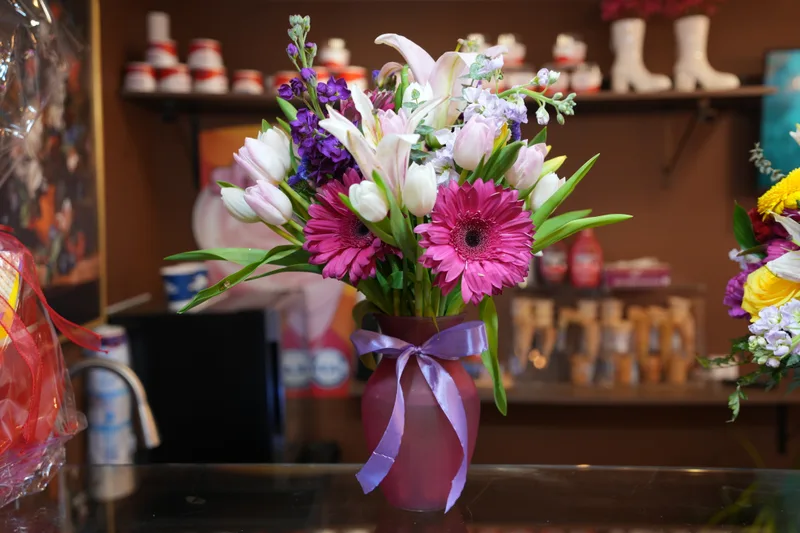
Counting backwards from the bimah
Not one rung of this ladder is set by a flower shop. Every step down it is a door being locked, opened or staffed by somebody else — a synagogue office, a banquet manager, a Sisterhood volunteer — and the only way to read it is from the top, starting at the moment the arrangement has to be standing in place and walking the clock in reverse until you reach the day none of it had happened yet.
Saturday, the service — it is already standing there
Nothing arrives at the synagogue today. No vehicle, no driver, nobody to sign, no exception for a family that means well. Whatever was carried in on Friday is exactly what the congregation sees, hours older, under the lights. The one Saturday delivery anywhere on your calendar belongs to the catering hall that evening, and it does not sit on this ladder at all — the Fox Hollow’s rule runs the other direction, forwards from the morning of the function.
Friday, when the last staff member leaves — the seal
Central Synagogue’s handbook draws the line at Friday afternoon and not on Shabbat, and the practical translation of that phrase is a key turning in a lock. This rung carries no task. It is the boundary that turns every rung beneath it from a preference into a deadline, and it is set by the building’s week rather than by anyone’s delivery schedule.
Friday, noon — where the line sits if your temple names an hour
Beth El’s FAQ puts the bimah bouquet inside the synagogue by noon, which means the office is not waiting out its own afternoon on your behalf. Work to this line until your congregation tells you it uses a later one. Arriving early at a staffed building costs nothing; arriving late at a congregation that named an hour produces a correct arrangement in a parking lot.
Friday, when office hours open — queued behind the linens
Temple Beth Am’s handbook books flowers, linens and luncheon table centerpieces into the same Friday office-hours window, so your delivery is one item in a morning a staff member is already shepherding. Ask the office what time that window actually opens and aim at the front of it. The back of it is where a short winter Friday quietly ends before anyone thinks to mention it.
Thursday — you are booking a person and a door, twice
Two buildings, two receivers, and neither one knows about the other. From the synagogue: who is physically inside on Friday, and does the arrangement go to the sanctuary, the office or a social hall. From the hall: who accepts a Saturday drop, and at which entrance — because flowers can be handed over at a loading door, while carrying them to tables inside the ballroom is a separate job done by somebody whose name is already on the venue’s certificate of insurance.
Wednesday — the last cut that can still be standing on Saturday
This is not a note about market day. It is about where a stem is in its life on the morning nobody can enter the building. Material that goes to the bimah has to be cut, conditioned and settled early enough that it opens on the congregation’s schedule and not on the shop’s, because there is no Saturday visit to correct it. Name a specific flower after this point and you are asking it to peak on the wrong day; if it has not been named by now, ask instead for designer’s choice built for a room that will be locked for twenty hours.
The week of — the call that can delete this whole ladder
At a congregation like Temple Beth Torah in Melville, Sisterhood telephones the family this week to arrange the bimah flowers. The correct state to be in when that phone rings is: nothing ordered for the synagogue. If that is your congregation’s practice, every rung above this one belongs to the party flowers alone, and the ladder you are climbing is half as tall as it looked.
The first morning both offices are open — four answers, not one
By Friday afternoon, by Friday noon, during Friday office hours, or do not bring your own. Those are four different instructions from four different buildings, not four ways of saying the same thing, and only the temple office can tell you which one governs your Saturday. The hall is a separate call with a separate answer, and a great many halls publish nothing at all about when flowers may arrive — which means their rule lives in a banquet manager’s head and may not even be the same for two rooms under one roof.
The day you book the room — the rung everything else hangs from
Before the contract is signed, while the banquet manager is still saying yes to things, ask what the hall’s rule is on live flowers and when they are permitted to arrive. Learning at that moment that a Saturday-night room will not accept a Friday delivery costs you nothing at all. Learning it in the week of the simcha costs a second vehicle on a second morning, and every date above this one was decided here, in a conversation nobody thought was about flowers.
Roses at the door tonight
Call 8 hours ahead. Made in our shop and ready with 8 hours’ notice.